
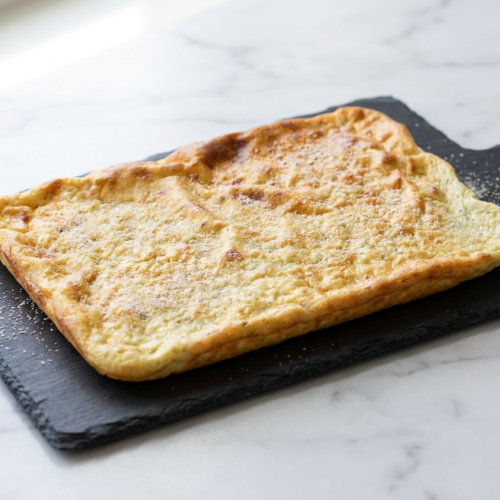
Pliable High-protein Cottage Cheese Flatbread

Discover a truly pliable, high-protein cottage cheese flatbread that overcomes sogginess and fragility. This upgraded recipe offers a sturdy, low-carb bread alternative perfect for versatile meal prep.
Equipment
- Food Processor or Blender
- Baking sheet
- Parchment paper
Ingredients
- 2 Large Whole Eggs
- 1 Cup Cottage Cheese
- 1 Tablespoon Psyllium Husk Powder
- ¾ Teaspoon Garlic Powder (optional)
- 1 Teaspoon Italian Seasoning (optional)
- Pinch Oregano (for topping, optional)
- Cooking spray or oil
Instructions
Blending the Batter
- Gather all ingredients: eggs, cottage cheese, and psyllium husk powder. Add them into your food processor or blender.
- Process or blend until the mixture is completely smooth, resembling a thick pancake batter with no cottage cheese lumps.
Preparing for Baking
- Preheat oven to 350°F (176°C). Line a sturdy baking sheet with good quality parchment paper and lightly coat it with cooking spray or oil to prevent sticking.
- Pour the blended cottage cheese mixture onto the prepared baking sheet.
- Gently spread the batter evenly across the parchment paper into a large rectangle or circle. Maintain an even thickness for uniform baking.
- If desired, sprinkle a pinch of oregano or other toppings over the surface.
Baking and Cooling
- Carefully place the baking sheet into the preheated oven. Bake for approximately 30-35 minutes, or until golden-brown and firm to the touch. Thicker flatbreads may require slightly more time.
- Once baked, remove the flatbread from the oven. Let it cool completely on the baking sheet before moving or handling to prevent tearing and allow it to firm up properly.
Notes
Best Cottage Cheese: For the best texture, use full-fat, small-curd cottage cheese. Very dry or high-protein brands might result in a crumbly batter. Psyllium Husk Importance: Psyllium husk powder is key to achieving a pliable, bread-like texture by absorbing excess moisture and preventing an eggy taste. Do not skip it for best results. Customizing Seasonings: Feel free to experiment with different seasonings like 'Everything Bagel Seasoning' or taco seasoning, or keep it plain for a neutral base. Cooling is Crucial: Always allow the flatbread to cool completely on the baking sheet before attempting to move or cut it. This step ensures it sets properly and prevents tearing. Troubleshooting Moisture: If your flatbread appears too moist after baking, let it cool completely, then gently flip it and return it to the oven for an additional 4-6 minutes to dry it out further. Preventing Stickiness: Ensure you use good quality parchment paper and lightly coat it with cooking spray or oil to prevent the flatbread from sticking. Freezing Instructions: Leftover flatbreads can be wrapped individually and frozen for up to 2 months. Reheat gently in a toaster oven or microwave. Nutrition information is estimated based on common ingredients and serving sizes and may vary.
Nutrition
Calories: 180kcalCarbohydrates: 7gProtein: 18gFat: 9gSaturated Fat: 4gCholesterol: 130mgSodium: 450mgPotassium: 100mgFiber: 4gSugar: 2gVitamin A: 5IUCalcium: 80mgIron: 1mg
Tried this recipe?Let us know how it was!