Starting the day with a satisfying meal can make a real difference. We all look for breakfast options that offer good fuel without requiring a lot of effort, especially when aiming for more protein. In many kitchens, myself included, finding a way to make protein-rich breakfasts consistently delicious can be a learning process. However, these high-protein scrambled eggs aim to be creamy, fluffy, and consistently good, without becoming watery.
Why You’ll Enjoy This Recipe
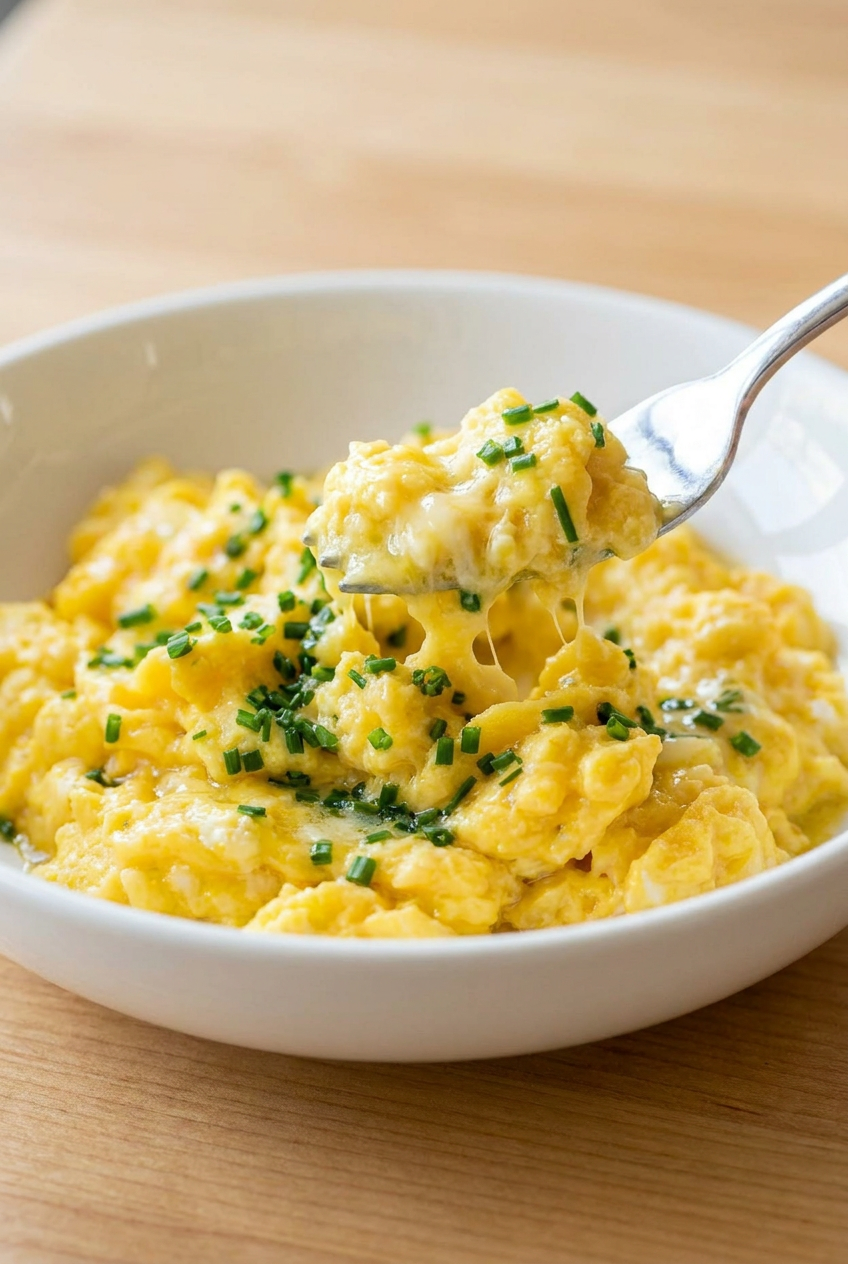
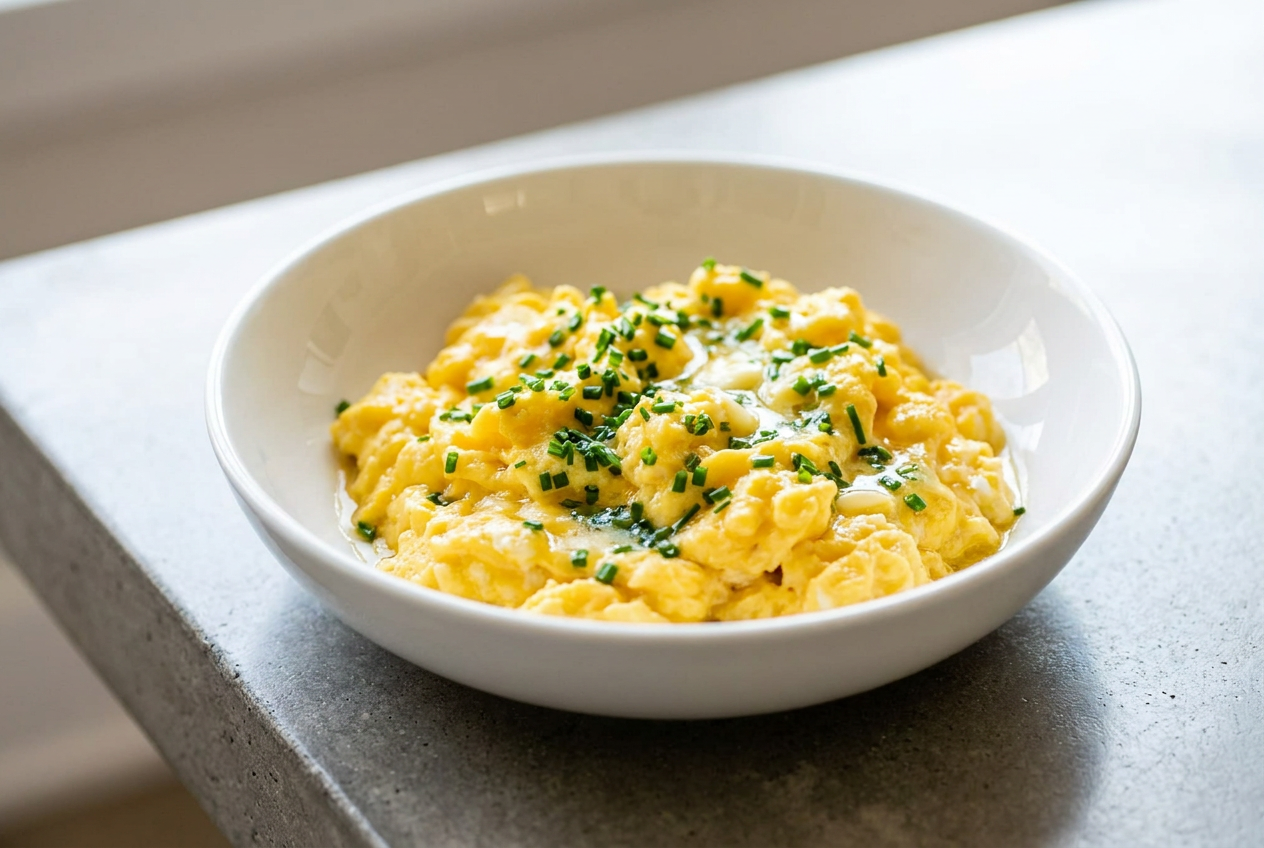
Creamy and Rich Texture: The “Chive Butter Finish” is a technique that involves stirring cold butter into the eggs off the heat. This helps create a smooth, rich texture that coats each piece of egg, adding a notable creaminess and flavor.
Fluffy, Not Watery: Dealing with watery scrambled eggs can be disappointing. This method addresses common issues to help ensure your high-protein scrambled eggs stay fluffy and firm, without excess liquid on the plate.
Protein-Packed: These eggs are a good source of protein, which can help keep you feeling full and provide sustained energy for your day. They are a practical option for a morning meal or for recovery after activity.
Enhanced Flavor, Simple Process: A small addition like fresh chives, warmed by the residual heat, can elevate the flavor of simple scrambled eggs. This recipe helps you create a flavorful breakfast in about 10 minutes.
Ingredients Needed
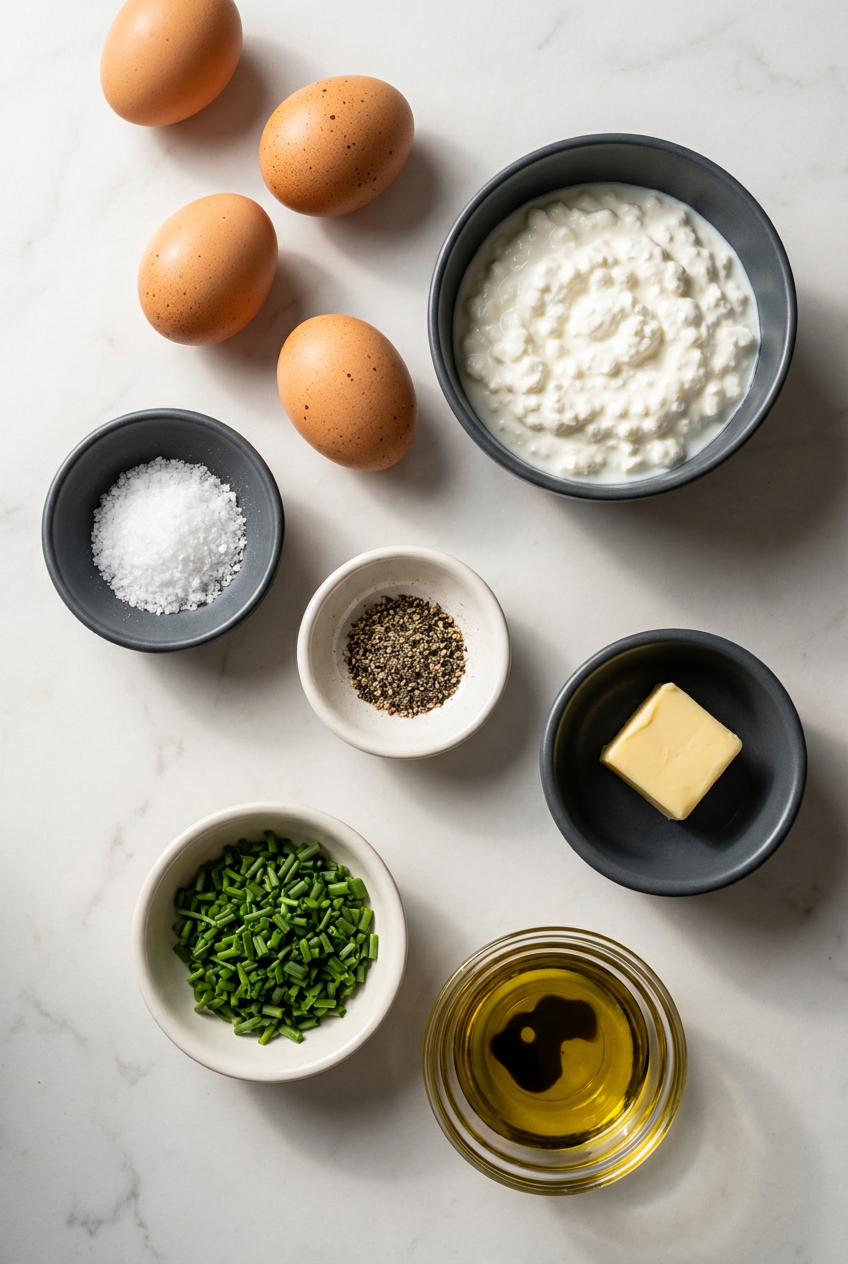
Gathering your ingredients is a key step to making these scrambled eggs. Each component contributes to the desired texture and flavor.
Ingredients
- 4 large eggs
- 1/2 cup 2% cottage cheese
- 1/8 teaspoon kosher salt
- fresh ground black pepper
- 1 teaspoon cold unsalted butter
- 1 tablespoon finely chopped fresh chives
- olive oil spray
Ingredient Notes & Substitutions
Cottage Cheese: For best results and to help prevent a watery outcome, choose a thick, good-quality cottage cheese. Brands with less excess whey tend to work well. For a smoother texture, you can briefly blend the cottage cheese before adding it to the eggs.
For the Chive Butter Finish: This step helps add to the creaminess and fresh taste. You’ll need just 1 teaspoon of cold, unsalted butter and 1 tablespoon of finely chopped fresh chives. This small addition contributes to the overall texture and fresh flavor.
Egg Whites: If you’re looking to adjust the protein content, you can substitute some whole eggs with liquid egg whites. A common ratio is to replace two whole eggs with about 1/2 cup of liquid egg whites.
Dairy-Free Option: For those avoiding dairy, an alternative to consider for a creamy texture is blending about 1/4 cup of silken tofu with your eggs. It can provide a similar richness without dairy.
How to Make High Protein Scrambled Eggs
Making these high-protein scrambled eggs involves a few simple steps. Following these instructions can help you achieve a satisfying and flavorful breakfast.
Whisking the Creamy Base
- In a medium bowl, combine your large eggs, cottage cheese, kosher salt, and a few cracks of fresh black pepper.
- Whisk this mixture for about 30 seconds until it looks uniform and well-combined, ensuring the cottage cheese is incorporated.
The Gentle Cook
- Place a medium nonstick skillet over medium-low heat. Using a lower temperature helps in achieving fluffy scrambled eggs.
- Once the pan is warm, lightly spray it with olive oil. Pour your whisked egg mixture into the pan.
- Allow the eggs to sit undisturbed for about 20-30 seconds, until the edges just begin to set.
- Using a rubber spatula, gently push the cooked egg from the edges towards the center, forming large, soft curds. Continue this gentle folding motion for 1 to 2 minutes.
The Perfect Finish
- Remove the pan from the heat when the eggs are mostly set but still look slightly moist. The residual heat in the pan will continue to cook them gently.
- Immediately, add the 1 teaspoon of cold butter and your finely chopped fresh chives directly into the pan.
- Gently fold these into the eggs. The cold butter will melt, adding to the creamy texture, and the chives will release their aroma.
- Transfer your cooked high-protein scrambled eggs to a plate and serve them immediately to enjoy their texture and flavor.
Understanding Cottage Cheese Eggs
Knowing some of the reasons behind cooking techniques can help improve your results. Here’s a look at what makes these cottage cheese eggs work well and how to handle common challenges.
Why the Chive Butter Finish Works
This technique of adding cold butter *off the heat* helps create a smooth finish. It also helps prevent the eggs from overcooking, which can lead to a dry texture. The butter melts into a rich sauce that coats the curds, carrying flavor and contributing to creaminess. The pan’s residual heat is just enough to gently warm the fresh chives, releasing their mild onion flavor without making them taste sharp.
How to Avoid Watery Eggs
Watery scrambled eggs can often be due to excess whey from the cottage cheese. To address this, first, choose a thicker cottage cheese brand with less liquid. If needed, you can briefly strain cottage cheese in a fine-mesh sieve for about 5 minutes to remove any extra whey. Second, blending the cottage cheese before mixing it with the eggs not only helps eliminate lumps but also assists in integrating the whey, helping to prevent it from separating during cooking. This can help ensure a more consistent, creamy texture.
Pro Tips & Troubleshooting
Even with simple recipes, a few tips can make a difference. Here are some suggestions to help ensure your high-protein scrambled eggs turn out well.
Tips for Fluffy Eggs Every Time
- Cooking eggs over high heat can lead to a tough, rubbery texture. Stick to medium-low heat for tender results.
- Using a good nonstick skillet and a flexible rubber spatula can make folding and preventing sticking easier.
- Aim for a gentle folding motion rather than vigorous stirring. This helps create larger, softer curds instead of breaking them down too much.
Common Mistakes to Avoid
- Cooking on too high heat is a frequent error that results in a rubbery texture.
- Scrambled eggs cook quickly, so it’s best to stay near the stove to monitor the heat and achieve desired doneness.
- Adding salt at the start helps create a more tender and flavorful curd, rather than making the eggs tough.
Variations, Serving & Storage
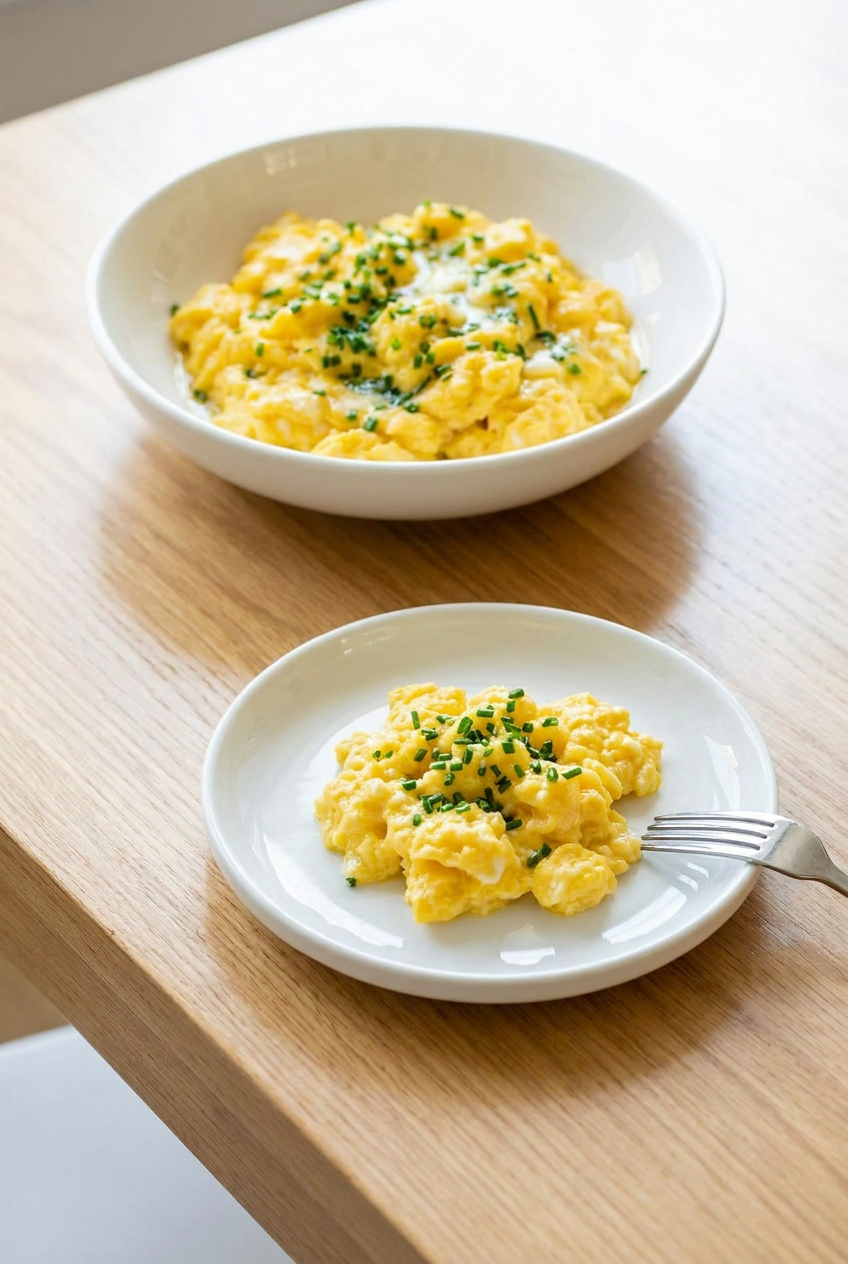
Once you’re comfortable with the basic high-protein scrambled eggs, you can customize them to your liking. Here’s how to vary them and ensure they are enjoyed.
Flavor Variations
- Add some vegetables by folding in sautéed spinach, mushrooms, or thinly sliced bell peppers for extra flavor and color.
- For a cheesy touch, stir in shredded cheddar, creamy feta, or freshly grated Parmesan at the end with the butter and chives.
- If you enjoy a bit of heat, add a pinch of red pepper flakes, a dash of garlic powder, or a splash of your favorite hot sauce.
Serving Suggestions
- These eggs are delicious piled on top of avocado toast, whether with whole grain or sourdough bread.
- For a more substantial meal, wrap them in a warm tortilla with black beans and salsa for a breakfast burrito.
- Pair your high-protein scrambled eggs with breakfast sausage or crispy bacon for a complete meal. You might also enjoy exploring our recipe for a high-protein breakfast quesadilla.
- They also make a good addition to a brunch platter.
Meal Prep and Reheating Instructions
While eggs are best when freshly made, you can prepare a batch ahead of time. Store them in an airtight container in the refrigerator for up to two days. When reheating, gently warm them in a covered nonstick skillet over low heat, adding a tiny splash of water or milk to help maintain moisture. Heat only until warmed through; avoid the microwave, as it can sometimes make scrambled eggs rubbery.
High Protein Scrambled Eggs

Equipment
- Medium bowl
- medium nonstick skillet
- Rubber spatula
Ingredients
- 4 large eggs
- 1/2 cup 2% cottage cheese
- 1/8 teaspoon kosher salt
- freshly ground black pepper to taste
- 1 teaspoon cold unsalted butter
- 1 tablespoon finely chopped fresh chives
- olive oil spray
Instructions
Whisking the Creamy Base
- In a medium bowl, combine your large eggs, cottage cheese, kosher salt, and a few cracks of fresh black pepper.
- Whisk this mixture for about 30 seconds until it looks uniform and well-combined, ensuring the cottage cheese is incorporated.
The Gentle Cook
- Place a medium nonstick skillet over medium-low heat. Using a lower temperature helps in achieving fluffy scrambled eggs.
- Once the pan is warm, lightly spray it with olive oil. Pour your whisked egg mixture into the pan.
- Allow the eggs to sit undisturbed for about 20-30 seconds, until the edges just begin to set.
- Using a rubber spatula, gently push the cooked egg from the edges towards the center, forming large, soft curds. Continue this gentle folding motion for 1 to 2 minutes.
The Perfect Finish
- Remove the pan from the heat when the eggs are mostly set but still look slightly moist. The residual heat in the pan will continue to cook them gently.
- Immediately, add the 1 teaspoon of cold butter and your finely chopped fresh chives directly into the pan.
- Gently fold these into the eggs. The cold butter will melt, adding to the creamy texture, and the chives will release their aroma.
- Transfer your cooked high-protein scrambled eggs to a plate and serve them immediately to enjoy their texture and flavor.
Notes
Nutrition
Frequently Asked Questions
Why put cottage cheese in scrambled eggs?
Adding cottage cheese to scrambled eggs can boost their protein content, which may help make the meal more filling. It also contributes to a creamy texture when cooked properly.
How do you make cottage cheese eggs not watery?
To help prevent watery cottage cheese eggs, select a thick, good-quality cottage cheese or briefly strain it through a fine-mesh sieve. Blending the cottage cheese with the eggs before cooking also helps to integrate the whey, which can prevent separation.
Can you taste the cottage cheese in scrambled eggs?
When incorporated correctly, the cottage cheese does not typically add a distinct, lumpy flavor. Instead, it blends into the eggs, contributing a subtle tang and a rich creaminess that enhances the overall taste and texture of the high-protein scrambled eggs.
What are the benefits of high-protein scrambled eggs for breakfast?
High-protein scrambled eggs can provide sustained energy, may help you feel full longer, and support muscle maintenance, making them a practical choice for a nutritious start to your day or a post-workout meal.
What are good ingredients to add for more flavor or protein?
For more flavor, consider adding fresh herbs like chives, dill, or parsley, a pinch of red pepper flakes, or sautéed vegetables. To add more protein, you can swap some whole eggs for liquid egg whites or fold in extra cheese at the end.
How do I store and reheat these eggs so they don’t get rubbery?
Store leftover high-protein scrambled eggs in an airtight container in the fridge for up to two days. Reheat them gently in a covered nonstick skillet over low heat with a splash of water or milk, heating only until warmed through to avoid overcooking and a rubbery texture.