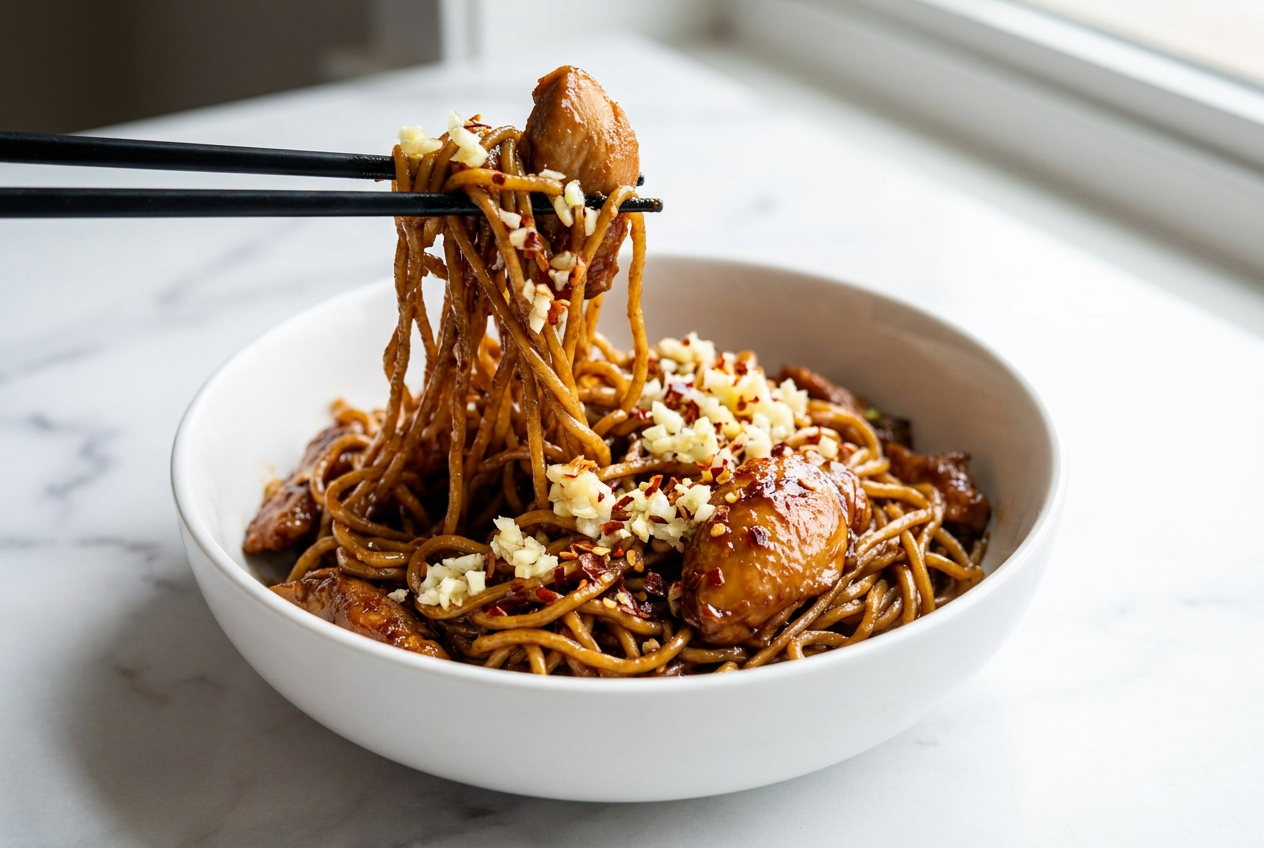
When you’re craving a satisfying meal that’s better than takeout on a busy weeknight, this recipe for sticky hoisin garlic chicken noodles is a perfect choice. It’s a flavorful dish that offers a deeply aromatic and delicious meal ready in under 30 minutes.
This recipe is designed to bring fantastic flavor into your home kitchen without the fuss, making it a great option for a new family favorite.
What Makes These Noodles Special
Building Flavor in Layers: This method builds flavor in stages. First, the chicken is cooked with a savory foundation of garlic and ginger. Then, a second addition of fresh garlic sizzled in hot oil at the end adds a bright, fragrant aroma right before serving.
Quick to Prepare: From prep to plate, this entire meal comes together in less than 30 minutes, making it a great solution for busy weeknights.
Easy One-Pan Meal: Everything comes together in a single large wok or pan, which helps minimize cleanup.
A Satisfying Meal: Made with chicken and colorful vegetables, this is a balanced dish that can leave you feeling full and satisfied.
Ingredients for Hoisin Garlic Chicken Noodles
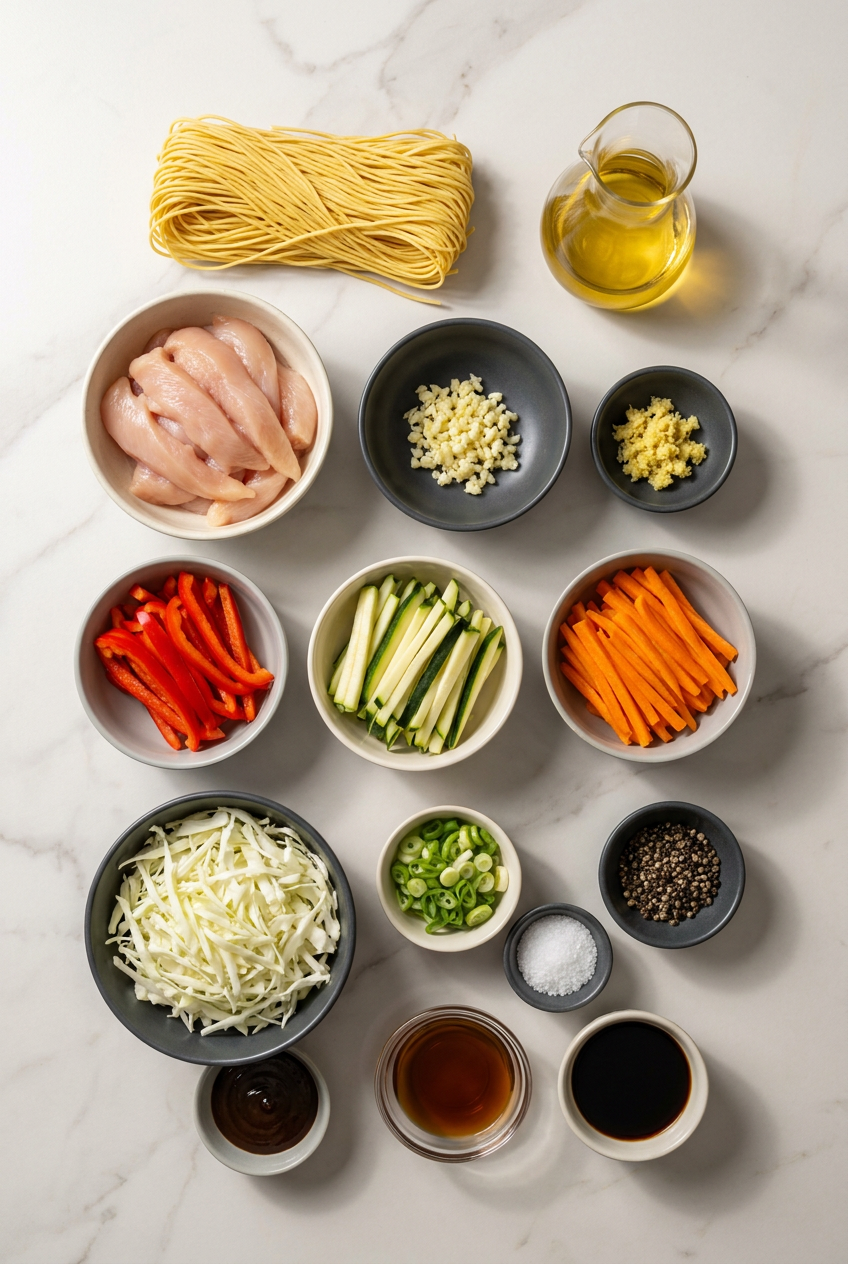
The magic of this dish comes from a balance of pantry staples. Each ingredient plays a crucial role in building that signature sweet, savory, and sticky sauce.
The Ingredients
- 200g egg noodles, dried
- 2 tablespoons cooking oil, divided
- 300g uncooked chicken breast, sliced into thin strips
- 3 cloves garlic, minced
- 1 tablespoon grated fresh ginger root
- 120g red bell pepper, sliced into thin strips
- 120g zucchini, sliced into thin strips
- 100g carrot, sliced into thin strips
- 150g white cabbage, shredded
- 4 green onions, sliced
- pinch salt and black pepper
- 6 tablespoons Hoisin Sauce
- 1 tablespoon soy sauce
- 1 tablespoon dark soy sauce
- 1 tablespoon rice vinegar
- 1 teaspoon sesame oil
- 60ml water
- Toasted sesame seeds, for garnish (optional)
- Fresh cilantro, chopped, for garnish (optional)
- Sriracha or red pepper flakes, to taste (optional)
Ingredient Notes and Substitutions
Hoisin Sauce: The quality of your hoisin sauce can make a difference. It’s a thick, fragrant paste made from fermented soybeans, and it provides the sweet and salty backbone of our sauce. A brand like Lee Kum Kee is a good choice for its consistent flavor.
Soy Sauces: Using both types is recommended. Regular soy sauce adds the primary saltiness and umami flavor. The dark soy sauce is less about salt and more about adding a deep color and a subtle, molasses-like sweetness to the dish.
Chicken: While lean chicken breast works wonderfully, you can substitute thinly sliced chicken thighs for a richer flavor. For an even quicker meal, using leftover rotisserie or pre-cooked shredded chicken is a great shortcut.
Noodles: Classic egg noodles are my go-to for their chewy texture. However, this recipe is very forgiving. Udon or even ramen noodles work great. For a gluten-free option, simply switch to rice noodles and ensure you use a gluten-free soy sauce (tamari).
How to Make Sticky Hoisin Garlic Chicken Noodles
Prepare Noodles & Sauce
- Begin by cooking your egg noodles according to the package directions. You want them to be al dente, with a slight chew, as they will cook a bit more in the pan. Drain them thoroughly and set them aside.
- In a small bowl, whisk together the Hoisin sauce, sesame oil, both light and dark soy sauces, rice vinegar, and water. This mixture is your sauce base.
Cook the Chicken and Veggies (Flavor Layer 1)
- Place a large wok or frying pan over medium-high heat. Add 1 tablespoon of the cooking oil. Add the chicken strips, a pinch of salt and pepper, two-thirds of your minced garlic, and all the grated ginger.
- Stir-fry for a few minutes until the chicken is just cooked through and developing golden-brown edges. Once cooked, remove the chicken from the pan and set it aside.
- Toss the sliced bell pepper, zucchini, carrot, and shredded cabbage into the same hot pan. Stir-fry for 2-3 minutes. You’re aiming for tender-crisp vegetables that still have a vibrant color and a bit of a bite.
The Fragrant Bloom & Finish (Flavor Layer 2)
- Push the vegetables over to one side of the pan to create an empty space. Add the remaining 1 tablespoon of oil to that spot. Drop in the remaining one-third of the minced garlic. Let it sizzle for 15-30 seconds until fragrant. Do not let it burn.
- Immediately return the cooked chicken to the pan, along with the drained noodles and the sauce you prepared earlier. Toss everything together for 1-2 minutes, making sure every strand and piece is coated in the glossy sauce. If using, stir in your desired amount of sriracha or red pepper flakes.
- Turn off the heat and stir in most of the sliced green onions. Serve the noodles immediately, garnishing each bowl with the remaining green onions, toasted sesame seeds, and fresh cilantro if desired.
Tips for the Best Sticky Noodles
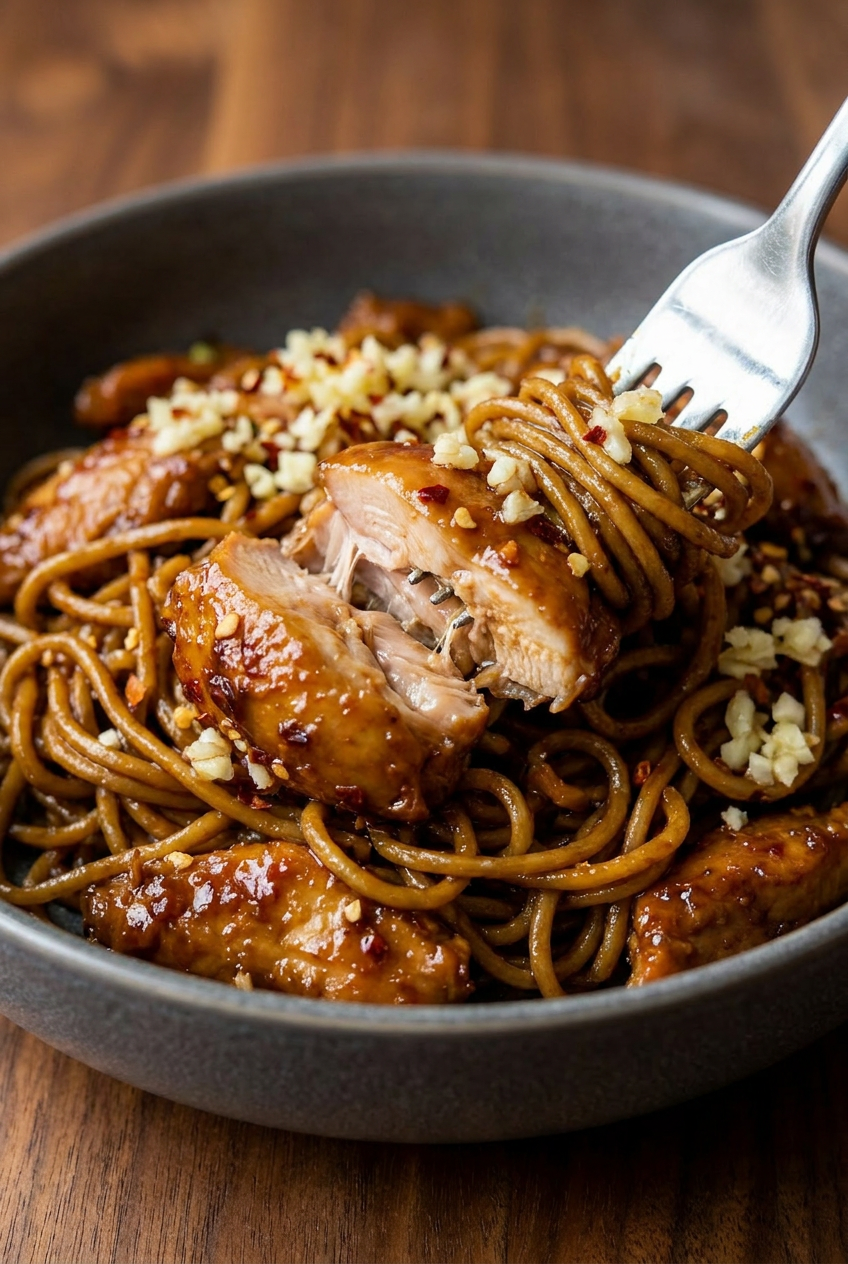
How the Sauce Flavors Work Together
A great sauce is all about balance. Here’s how we achieve it:
Sweet & Body: Hoisin sauce is the star, providing that signature sweet, sticky foundation that clings to the noodles.
Salty & Umami: Regular soy sauce brings the necessary savory depth and umami quality.
Color & Complexity: Dark soy sauce is our secret for that beautiful, rich dark color and a hint of caramel-like sweetness.
Acidity: A splash of rice vinegar is essential. It cuts through the richness, brightens all the other flavors, and stops the sauce from being overly sweet.
Why You Should Slice Chicken Thinly
There’s a simple reason for this classic instruction: surface area. Slicing the chicken thinly allows it to cook incredibly fast and evenly, ensuring it stays tender and juicy. More importantly, it creates more surface area for the sauce to cling to, meaning more flavor in every bite.
Getting a Crispier Noodle Texture
Here’s a wok cooking trick for more texture. Once you’ve tossed everything in the sauce, spread the noodles into an even layer in the hot pan. Let them sit, undisturbed, for a minute or two. The sugars in the hoisin sauce will caramelize against the hot surface, creating slightly crispy and chewy patches that provide a fantastic contrast to the soft noodles.
Pro Tips and Common Mistakes
Expert Tips for Success
- Drain Well: After cooking your noodles, make sure they are drained thoroughly. Any excess water will dilute your sauce and prevent it from becoming truly sticky.
- High Heat is Your Friend: A good stir-fry depends on high, consistent heat. This sears the ingredients quickly, locking in flavor and preventing the vegetables from steaming and becoming soggy.
- Balance the Sweetness: If you find your brand of hoisin is on the sweeter side, an extra splash of rice vinegar can balance the sweetness nicely.
Common Mistakes to Avoid
- Burnt Garlic: Be vigilant, especially during that final addition of garlic. Burnt garlic is intensely bitter and can ruin the dish. As soon as you smell it, it’s time to mix.
- Overcooked Noodles: Always cook your noodles to al dente, or even a minute shy of it. They’ll absorb sauce and continue to cook in the hot pan, so starting with overcooked noodles can lead to a mushy result.
- Freezing Leftovers: It’s best not to freeze this dish. The texture of the egg noodles and vegetables can degrade significantly when thawed. This meal is best enjoyed fresh.
Variations, Serving, and Storage
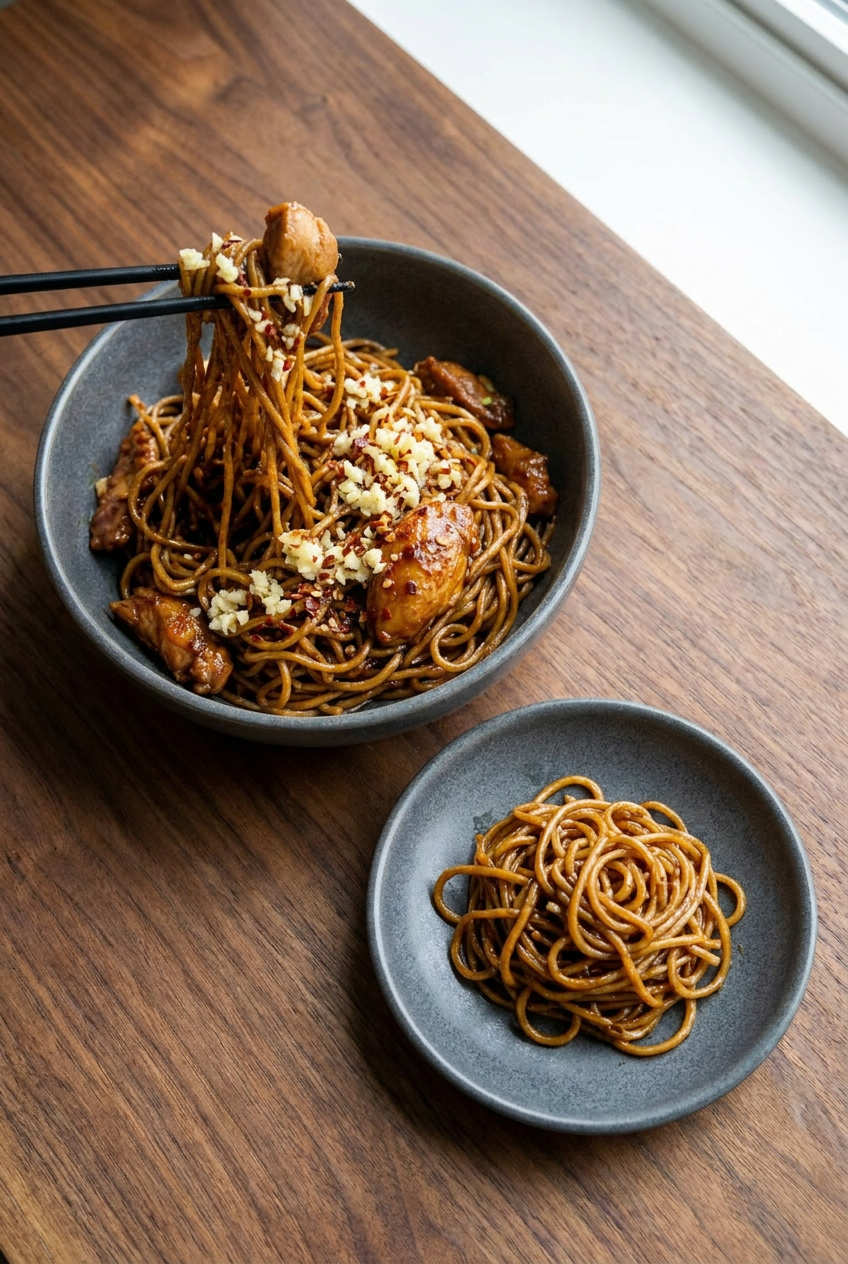
Recipe Variations
- Vegetarian/Vegan: Swap the chicken for firm tofu or tempeh. You can also bulk it up with more vegetables like broccoli, mushrooms, or bok choy. Just ensure your hoisin sauce is certified vegan.
- Gluten-Free: For a gluten-free version, use tamari instead of soy sauce and choose your favorite rice noodles.
- Other Proteins: This sauce is incredibly versatile. It’s fantastic with thinly sliced beef, or shrimp.
- Spice It Up: For more heat, add sriracha or red pepper flakes to the sauce to your preferred level of spiciness.
Serving Suggestions
- Garnish generously with fresh cilantro, toasted sesame seeds, and extra green onions for freshness and texture.
- Serve alongside some crispy spring rolls or simple steamed broccoli.
- For an extra protein boost, top each bowl with a runny fried egg or a jammy soft-boiled egg.
Storage and Reheating
- Storage: Store any leftovers in an airtight container in the refrigerator. They will keep well for up to 3 days.
- Reheating: The best method is to reheat the noodles in a skillet or wok over medium heat. Add a small splash of water to help loosen the sauce and steam the noodles back to life until heated through. Microwaving can sometimes make the noodles rubbery.
This recipe for sticky hoisin garlic chicken noodles is a fast and flavorful alternative to takeout. The flavor-layering technique helps elevate this simple dish into something special. I hope you enjoy making it in your own kitchen.
Quick Sticky Hoisin Garlic Chicken Noodles

Equipment
- Large wok or frying pan
- Small bowl
Ingredients
- 200 g egg noodles, dried
- 2 tablespoons cooking oil divided
- 300 g uncooked chicken breast sliced into thin strips
- 3 cloves garlic minced
- 1 tablespoon grated fresh ginger root
- 120 g red bell pepper sliced into thin strips
- 120 g zucchini sliced into thin strips
- 100 g carrot sliced into thin strips
- 150 g white cabbage shredded
- 4 green onions sliced
- 1 pinch salt and black pepper
- 6 tablespoons Hoisin Sauce
- 1 tablespoon soy sauce
- 1 tablespoon dark soy sauce
- 1 tablespoon rice vinegar
- 1 teaspoon sesame oil
- 60 ml water
- Toasted sesame seeds for garnish (optional)
- Fresh cilantro, chopped for garnish (optional)
- Sriracha or red pepper flakes to taste (optional)
Instructions
Prepare Noodles & Sauce
- Begin by cooking your egg noodles according to the package directions until al dente. Drain them thoroughly and set aside.
- In a small bowl, whisk together the Hoisin sauce, sesame oil, both light and dark soy sauces, rice vinegar, and water to create the sauce base.
Cook the Chicken and Veggies (Flavor Layer 1)
- Place a large wok or frying pan over medium-high heat. Add 1 tablespoon of cooking oil. Once hot, add the chicken strips, a pinch of salt and pepper, two-thirds of the minced garlic, and all the grated ginger.
- Stir-fry for a few minutes until the chicken is just cooked through and has golden-brown edges. Remove the chicken from the pan and set it aside.
- Toss the sliced bell pepper, zucchini, carrot, and shredded cabbage into the same hot pan. Stir-fry for 2-3 minutes until the vegetables are tender-crisp.
The Fragrant Bloom & Finish (Flavor Layer 2)
- Push the vegetables to one side of the pan. Add the remaining 1 tablespoon of oil to the empty space. Add the remaining one-third of minced garlic and let it sizzle for 15-30 seconds until fragrant, being careful not to let it burn.
- Immediately return the cooked chicken to the pan, along with the drained noodles and the prepared sauce. If using, stir in your desired amount of sriracha or red pepper flakes. Toss everything together for 1-2 minutes until every component is coated in the glossy sauce.
- Turn off the heat and stir in most of the sliced green onions. Serve immediately, garnishing each bowl with the remaining green onions, toasted sesame seeds, and fresh cilantro, if desired.
Notes
Nutrition
Frequently Asked Questions
What’s the secret to getting sticky, non-soggy noodles?
The secret is twofold. First, drain your noodles very well after cooking to remove excess water. Second, use a high enough heat so that the sauce reduces slightly and clings to the noodles, rather than pooling at the bottom of the pan.
Can I make this recipe gluten-free?
Absolutely. To make this gluten-free, simply substitute the soy sauces with gluten-free tamari and use rice noodles instead of egg noodles. The taste will be just as delicious.
What other proteins or vegetables can I add?
This recipe is very flexible. For protein, thinly sliced beef, pork, shrimp, or firm tofu are all excellent choices. For vegetables, feel free to add in mushrooms, bok choy, snow peas, or broccoli florets.
How can I adjust the sweetness or spiciness of the sauce?
To reduce sweetness, you can add an extra splash of rice vinegar. To increase the spice, add red pepper flakes or sriracha to the sauce mixture to your liking.